
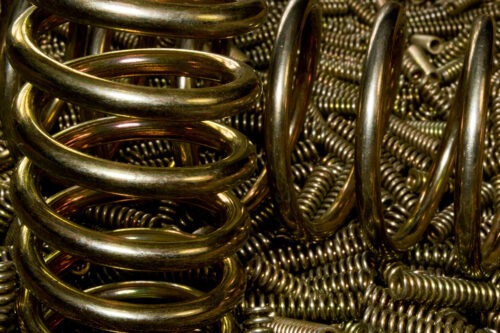
When performance depends on conductivity, corrosion resistance, and formability, brass springs are an excellent choice. Brass, an alloy of copper and zinc, offers a unique balance of mechanical properties and environmental resilience, making it a preferred material in electrical, plumbing, decorative, and low-friction mechanical applications.
At Wermke Spring, we manufacture custom brass springs tailored to meet precise performance criteria. With over 70 years of experience and state-of-the-art production capabilities, we help engineers and manufacturers across industries choose the right materials and spring designs for long-lasting results. To learn more or request a custom spring manufacturing quote, contact us today.
What Are Brass Springs?
Brass springs are mechanical springs made from brass wire, typically using grades such as C260 (Cartridge Brass), C360 (Free Cutting Brass), or other copper-zinc alloys. Brass is well known for its excellent machinability, corrosion resistance, and good electrical conductivity. These properties make it ideal for low-load applications that require reliability, a smooth surface finish, and often, a non-magnetic response.
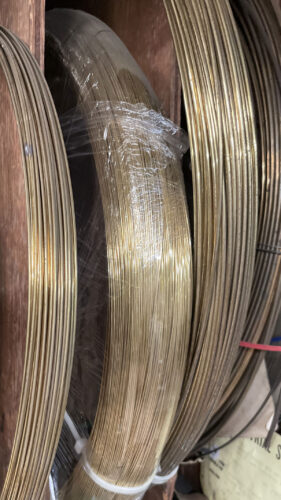
Brass wire is typically formed into compression springs, extension springs, torsion springs, or custom wire forms depending on the function and application.
Benefits of Brass Springs
1. Excellent Corrosion Resistance
Brass resists tarnishing and corrosion in air and water, making it a solid choice for springs exposed to moisture, plumbing environments, or light chemical exposure.
2. Non-Magnetic Properties
Brass is inherently non-magnetic, making it ideal for sensitive instrumentation or electronic components where magnetic interference must be avoided.
3. Electrical Conductivity
Brass offers good conductivity and is often used for spring contacts, connectors, and battery terminals.
4. Decorative Appeal
Brass has a natural golden color that makes it a popular option for visible hardware, instrument components, or consumer products where aesthetics matter.
5. Easy Formability
Brass wire forms and bends easily while maintaining sufficient springiness for light-duty return and deflection applications.
Limitations of Brass Springs
While brass springs offer many advantages, there are certain limitations to be aware of:
1. Lower Tensile Strength
Compared to high-carbon or stainless steels, brass has lower tensile strength and is unsuitable for high-load or high-stress applications.
2. Limited Fatigue Life
Brass springs are better suited for static or low-cycle applications, as repeated flexing can lead to material fatigue more quickly than in other alloys.
3. Cost
While brass is widely available, it can be more expensive than standard spring steels, especially in large volumes or heavier wire gauges.
4. Temperature Sensitivity
Brass softens under elevated temperatures and is not suitable for high-heat applications.
Common Applications of Brass Springs
Brass springs are used in a range of industries that prioritize corrosion resistance, conductivity, or non-magnetic performance.
Electrical and Electronics
- Contact springs
- Battery terminals
- Switches and circuit components
Plumbing and Fluid Systems
- Valve springs
- Faucet mechanisms
- Backflow preventers
Consumer Products
- Musical instruments
- Decorative hardware
- Eyewear hinges and adjustment arms
Medical and Lab Equipment
- Sensitive instruments
- Non-magnetic fixtures
Brass springs are especially useful in applications where the spring is exposed or must function within electrically or magnetically sensitive assemblies.
Brass Grades for Springs
The most common brass alloys used for spring applications include:
C260 (Cartridge Brass)
- Composition: ~70% Copper, 30% Zinc
- Good cold workability
- High strength among brass alloys
- Excellent for precision springs and electrical applications
C360 (Free Cutting Brass)
- Excellent machinability
- Best for CNC-fabricated spring components
- Not as formable as C260
Phosphor Bronze (an alternative copper alloy)
- Better fatigue resistance than brass
- Higher strength
- Slightly more expensive but better suited for cyclic loads
We can help determine whether a true brass or alternative copper-based alloy is better suited to your application.
Engineering Considerations for Brass Spring Design
Brass is best suited for springs that operate in:
- Corrosive environments (without extreme chemicals)
- Low to moderate mechanical loads
- Non-magnetic, conductive, or aesthetically sensitive applications
Key design considerations include:
- Lower spring rate than steel
- Conservative deflection limits
- Need for protective plating if long-term exposure to aggressive agents is possible
Our engineering team evaluates every application to optimize brass spring geometry, gauge, coil count, and finish for reliable and consistent performance.
Frequently Asked Questions About Brass Springs
Are brass springs as strong as steel springs?
No. Brass has lower tensile strength than music wire or stainless steel, making it best for light-load, static, or low-cycle applications.
Can brass springs be used outdoors?
Yes, brass offers natural corrosion resistance and is commonly used in marine and plumbing applications. However, exposure to acidic or harsh chemicals should be avoided.
Do brass springs conduct electricity?
Yes. Brass is an excellent conductor and is often used in applications where the spring also functions as an electrical contact.
Are brass springs magnetic?
No. Brass is non-magnetic, which is essential for certain instrumentation, electronic, or medical applications.
Can you manufacture custom brass springs?
Yes. At Wermke Spring, we specialize in custom spring manufacturing and can form brass into compression, extension, torsion, and wire form springs to match your performance and dimensional requirements.
Trust Wermke Spring for Brass Spring Manufacturing
Wermke Spring has decades of experience manufacturing custom springs from a variety of materials, including brass and other copper alloys. Whether you’re producing electrical connectors, decorative hardware, or medical instruments, we offer the knowledge, capabilities, and customer service to meet your goals.
From prototype to production, we deliver:
- Precision-formed brass springs
- Tight tolerances and dimensional accuracy
- Material certifications
- Technical support every step of the way
Contact Us to Learn More
Looking for custom brass springs tailored to your project? Contact Wermke Spring today at (636) 677-5500 or reach out online to discuss your application or request a quote. We’re here to help you choose the right material, optimize your spring design, and deliver components you can count on.