Zinc plating is one of the most effective and economical surface treatments for protecting springs used in industrial, automotive, agricultural, and electrical applications. By applying a uniform layer of zinc onto carbon steel or alloy steel spring wire, manufacturers significantly extend component life, improve corrosion resistance, and strengthen overall performance in demanding environments.
Whether you’re sourcing zinc-plated compression springs, extension springs, torsion springs, or custom wire forms, understanding the technical aspects of the zinc plating process ensures you choose the right finish for your operating conditions.
How Zinc Plating Works for Springs
Zinc plating, also called electrogalvanizing, uses an electrolytic process to deposit a uniform layer of zinc onto th
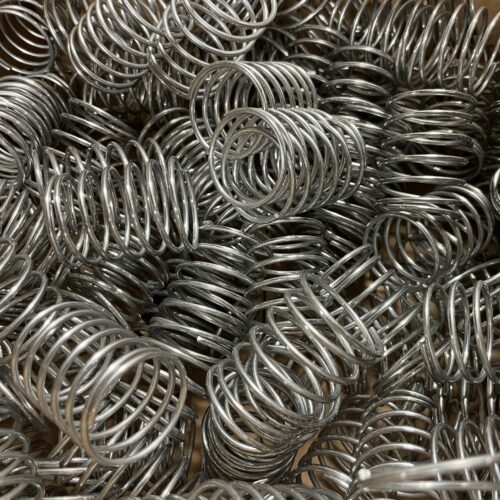
Zinc-plated compression springs
e surface of the spring. Because springs have helical, cylindrical, or complex geometries, plating uniformity is essential for consistent performance.
- Critical Surface Preparation: Proper surface prep prevents flaking, blistering, and poor coverage on the inner coils.
- Electrolytic Zinc Deposition: Springs serve as the cathode in an electrolyte bath where zinc ions bond to the steel.
- Post-Plating Treatments
After zinc application, springs often receive:
- Chromate conversion coatings (clear, yellow, black, or olive drab)
- Passivation layers to minimize white corrosion
- Topcoats or sealers for improved hardness and chemical resistance
- Hydrogen embrittlement relief baking (critical for high-carbon spring wire)
Hydrogen embrittlement baking is especially important—without it, spring steel can become brittle and prone to failure.
Coating Thickness for Zinc-Plated Springs
Zinc coating thickness directly impacts spring durability and environmental resistance. Common plating thicknesses include:
| Coating Type | Typical Thickness |
| Commercial Zinc | 5–8 µm (0.0002–0.0003″) |
| Standard Zinc | 8–12 µm (0.0003–0.0005″) |
| Heavy Zinc | 12–25+ µm (0.0005–0.001″) |
Springs used in outdoor, automotive, and high-humidity environments typically require heavier coatings or enhanced passivation.
Corrosion Resistance and Salt Spray Performance
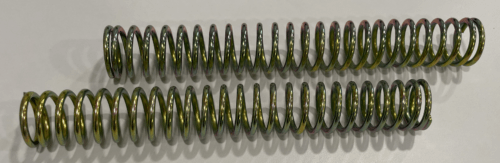
Compression spring with zinc plate and yellow chromate dip
Zinc-plated springs can achieve excellent corrosion resistance depending on the chromate and thickness. Typical ASTM B117 salt spray results include:
- Clear/Blue Chromate: 24–72 hours to white rust
- Yellow Chromate: 96–200+ hours
- Black Chromate: moderate corrosion resistance with cosmetic value
- Thick-Film Passivation: up to 500 hours or more
Because zinc is sacrificial to steel, the coating continues to protect the spring even when scratched—ideal for springs that flex or experience surface abrasion.
Benefits of Zinc Plating for Springs
- Superior Corrosion Protection:
- Zinc forms a stable oxide layer that shields springs from moisture, salt, oils, and chemicals.
- Excellent Uniformity on Coiled Surfaces:
- Properly applied zinc plating can reach:
- Inner coil surfaces
- Tight radii
- Wire intersections in complex spring forms
- Uniform plating helps maintain spring rate and performance.
- Properly applied zinc plating can reach:
- Cost-Effective Alternative to Stainless Steel
- Zinc plating provides strong corrosion protection at a fraction of the cost of stainless steel spring wire.
- Multiple Finish Options
- Clear, blue, yellow, and black chromates enhance both appearance and function.
- Lubricity for Dynamic Applications
- Zinc plating reduces friction, helping springs cycle smoothly during repeated compression or extension.
Applications for Zinc-Plated Springs
Zinc-plated springs are widely used in environments where steel must be protected from moisture, chemicals, and oxidation, including:
- Automotive latches, brakes, and suspension components
- Electrical and electronic equipment
- Agriculture and outdoor equipment
- Industrial machinery and assemblies
- HVAC and appliance components
- Construction hardware and tools
Their strength, fatigue resistance, and corrosion protection make them ideal for high-volume, high-performance applications.
Key Industry Specifications:
Reputable spring manufacturers commonly plate to standards such as:
- ASTM B633 — Electrodeposited zinc coatings
- ASTM B117 — Salt spray testing
- SAE/AMS 2402 — Aerospace zinc plating
- ISO 4042 — Fastener coating requirements
- RoHS & REACH compliant finishes
For high-carbon steel springs, many customers also require documented hydrogen embrittlement relief baking per industry guidelines.
Why Choose Zinc-Plated Springs?
Zinc-plated springs offer an excellent combination of:
- Corrosion resistance
- Sacrificial protection
- Affordability
- Consistent performance in demanding environments
For customers needing durable, cost-effective springs without upgrading to stainless steel, zinc plating is often the best overall value.
Order Zinc-Plated Springs in St. Louis & Nationwide
If you would like to learn more about our ability to manufacture zinc-plated springs for your applications, please contact us. Based out of St. Louis, Missouri, we partner with clients throughout the Midwest and nationwide. You can complete our form online to provide us with your specifications and requirements in order to receive a quote for your specific spring needs.