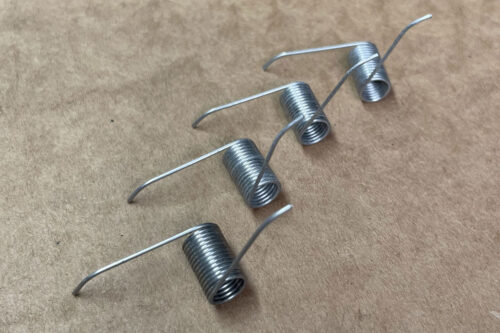
Torsion springs are helical springs that work by twisting. Unlike compression or extension springs that operate along a linear axis, torsion springs exert torque or rotary force when one end of the spring is rotated about its axis while the other end is held stationary. This stored rotational energy is released when the spring returns to its original position. So what are torsion springs used for? Read on to get all the facts.
At Wermke Spring, we specialize in the engineering and manufacturing of custom torsion springs for a wide range of industries and mechanical systems. With more than 70 years of spring manufacturing experience, our team delivers high-performance torsion springs tailored to precise torque, angular deflection, and environmental requirements. Contact us to learn more about what torsion springs are and how they work or request a spring manufacturing quote.
Understanding How Torsion Springs Work
The key to understanding what torsion springs are is how torsion springs work. Torsion springs store and release mechanical energy through angular displacement. The legs of the spring rotate about the central axis, producing torque that opposes the direction of rotation.
The key variables in torsion spring design include:
- Torque (T): The moment or rotational force exerted by the spring
- Angular deflection (θ): The angle through which the spring is twisted
- Spring rate (k_t): The torque required to rotate the spring through a unit of angle
The torque generated by a torsion spring follows a linear relationship:

Where:
- T = torque (in-lb or N·mm)
- k_t = spring rate or torsional stiffness (in-lb/rad or N·mm/°)
- θ = angular deflection (radians or degrees)
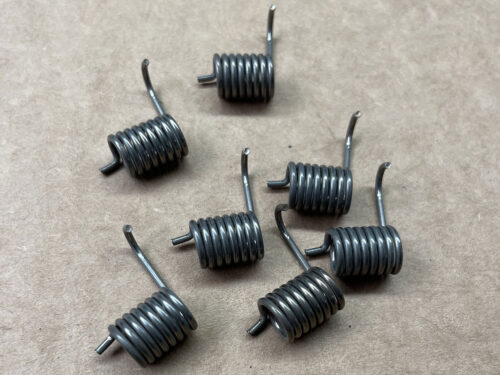
Leg orientation is also a critical design factor. Torsion springs can be made with straight, tangential, or custom-shaped legs that fit precisely into their intended assemblies.
Key Design Features of Torsion Springs
- Body Diameter – Determines overall size and torque capacity
- Wire Diameter – Affects strength and spring rate
- Leg Length and Shape – Customizable for application fit and torque application
- Direction of Wind – Left-hand or right-hand wound depending on torque direction
- Number of Coils – Influences torque output, angular travel, and ultimately leg orientation
Torsion springs can be single or double-bodied (coils wound in opposite directions), which is common in garage door or mechanical counterbalance systems.
Common Applications of Torsion Springs
Torsion springs are used in mechanisms that require rotation, controlled resistance, or return force. They provide smooth, consistent torque and are ideal for tight spaces where linear motion isn’t practical.
Typical Uses Include:
- Hinges and doors – Including vehicle hoods, trunk lids, or appliance lids
- Clothespins and clips – Rotational grip mechanisms
- Automotive systems – Throttle linkages, latches, and steering column mechanisms
- Aerospace and defense – Flight control surfaces, release mechanisms
- Medical devices – Levers, actuators, and surgical instruments
- Industrial equipment – Rotating arms, safety interlocks, and indexing systems
Torsion Spring Materials
So what are the best torsion spring materials? The selection of spring material depends on performance criteria like torque, temperature resistance, fatigue life, and corrosion exposure.
Common Materials Include:
- Music Wire – High strength, ideal for dry environments with minimal corrosion risk
- 302/316 Stainless Steel – Good corrosion resistance for marine, food-grade, and medical applications
- Chrome Silicon – Superior fatigue resistance and performance at elevated temperatures
- Phosphor Bronze and Beryllium Copper – Excellent electrical conductivity, non-magnetic properties
Wermke Spring provides full material consultation and certification based on your project’s environmental and mechanical demands.
Learn more about Torsion Spring Materials
Torsion Spring Design Considerations
When designing a torsion spring, engineers must carefully calculate torque capacity, leg geometry, and angular deflection limits. Over-torquing or improper leg orientation can lead to premature failure.
Key Design Variables:
- Free Angle – The angle between the legs at rest
- Maximum Deflection – Maximum angle the spring can rotate safely
- Working Torque – The force required to rotate the spring within the operating range
- Leg Ends – Must be secured to transfer load properly and safely
Wermke Spring uses custom tooling and CNC forming equipment to produce torsion springs with tight tolerances and repeatable performance.
Learn more about Torsion Spring Types & Design
Frequently Asked Questions About Torsion Springs
What are torsion springs used for?
Torsion springs are used in mechanical systems where rotation and controlled torque are needed. They store and release energy through twisting rather than compression or extension.
What’s the difference between a torsion spring and a compression spring?
Compression springs store energy by being compressed along their axis. Torsion springs store energy by twisting around their axis. Each serves different applications based on motion and force direction.
Can torsion springs be wound in either direction?
Yes. Torsion springs can be wound left-hand or right-hand depending on the required torque direction. It’s essential that the wind direction matches the applied force to avoid failure.
What are double torsion springs?
Double torsion springs have two sets of coils wound in opposite directions, joined by a central leg. This design allows for more torque and stability in applications with counter-rotating components.
Can I request a custom torsion spring with non-standard legs?
Absolutely. Wermke Spring designs and manufactures torsion springs with a wide variety of leg configurations including straight, hooked, offset, or specialty ends.
Trust Wermke Spring for Torsion Spring Design and Manufacturing
At Wermke Spring, we combine proven engineering practices, advanced equipment, and deep industry experience to deliver precision torsion springs that meet exact load and motion specifications. Our springs are built to perform in critical applications, whether for aerospace assemblies, automotive mechanisms, or industrial equipment.
With custom torsion spring manufacturing, we support customers at every stage, from concept development and prototyping to full-scale production. Each spring is manufactured to strict quality standards and backed by responsive customer service.
Contact Wermke Spring Today
Still wondering what are torsion springs, or ready to get started on a custom design? Contact Wermke Spring today at (636) 677-5500 or submit your request online. Our team is ready to assist you with engineering support, quotes, and spring solutions that deliver performance, precision, and reliability.